

What is ICSI?
Intra-cytoplasmic sperm injection (ICSI) has revolutionized the treatment of male factor infertility. It differs from conventional in vitro fertilisation (IVF) in that instead of mixing many sperm with an egg in a dish, the embryologist selects a single sperm and manually injects it directly into the egg to initiate fertilization.
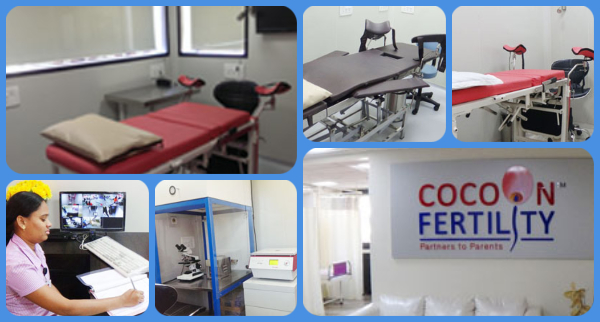
ICSI is a highly specialized procedure and the success of ICSI depends upon the quality of laboratory equipment and skill and experience of the embryologist performing it. We have a high end embryology laboratory specially equipped with the latest high powered microscopes and micromanipulators. It is handled by our competent, dedicated, in-house embryologists with over 10 years of experience at ICSI who are available 365 days of the year.
Who can benefit from ICSI treatment?
What is the success rate of ICSI?
ICSI success rates are very similar to that of IVF. It is 40-45% per started cycle in women less than 35 years. About 85-90% of our patients conceive within three cycles. The success rate is higher in women under the age of 35 years. It reduces as age advances. Frozen embryo transfers after ICSI also have a similar success rate as those after IVF which is about 50-55%.
What is a typical ICSI process?
With the help of the micromanipulators, the egg is gently held in place with a specialized holding suction pipette. A delicate, sharp and hollow microinjection needle is used to immobilize and pick up a sperm. This needle which is carrying a sperm, is carefully inserted through the zona (shell of egg) and into the cytoplasm of the egg. The sperm is injected into the cytoplasm and the needle carefully removed.
In this way the sperm bypasses the barriers easily and fertilization usually follows.
Once fertilization occurs, all further steps are the same as in IVF.